

For most of this industry’s history, affiliate vetting meant three things: a certificate of insurance on file, a reference from someone you trust, and a handshake at a trade show. That worked when farm-out was a favor between friends. It doesn’t work when the affiliate you’ve never met is carrying your client’s CFO from the airport, and on November 4 a panel of operators and auditors spent an hour explaining why.
This is a summary of our latest GNet Workshop Wednesday, presented with Transportation Advisors. The full recording is below.
▶ Watch the full workshop on YouTube →
On the panel: Tom Holden and Brittney Holden of Transportation Advisors, the independent firm that runs the audits behind GNet Safety & Compliance Certification; Randy Allen of James Limousine; and GNet CTO Reza Shahbazi. Yasmin Zafar of GNet moderated. Operators in the room, including Tony Mehdiof, Paul Pasternak, Ken Lucci and Stephen Robinson, took the conversation well past the slides.
Here’s what we took away.
1. Duty of Care Lives in the Records
Everyone on the call agreed on what duty of care means. The real divide in the industry is who can prove it.
- Tom Holden has spent 24 years in passenger transportation, including running a limousine and motor coach company in Charlotte, North Carolina, before founding Transportation Advisors in 2018. His definition: duty of care is the safety policies, procedures and recordkeeping a federal inspection requires. Not the paragraph on your website.
- He separated companies that hold only a DOT number from those with operating authority. The obligations differ, and the audit is scoped to match.
- Paul Pasternak called duty of care a compilation of insurance, recordkeeping and safety standards, and argued compliance should be standard operating practice, not an option. Too many companies run without written standard operating procedures, and it shows in RFPs and in how the industry is perceived.
- Ken Lucci added that it has to be consistent top to bottom: insurance, safety, telematics and chauffeur identification.
- Tom’s business case: better safety shows up in the bottom line, and documented duty of care practices help operators hold off steep insurance premium increases.
2. When You Farm Out, You’re the Broker
Most operators treat farm-out as a capacity decision. The panel’s point was that it’s also a liability decision.
- Tom and Randy explained that an operator who sends a job to an affiliate is acting as a broker for that trip. If there’s a lawsuit, the operator who selected the affiliate is part of it.
- That changes what vetting has to answer. The question isn’t “do they have insurance?” It’s “what did you check before you sent the trip?”
- Randy’s view: the value of an independent, third-party evaluation is that you’re no longer relying on your own informal process to answer that question.
- A Chicago operator described a local problem with national reach: city licensing rules that don’t line up with federal and state insurance minimums. Tom said those mismatches exist across the country, and expects passenger transportation to face more regulatory scrutiny once trucking regulations settle.
3. What the Audit Actually Involves
There’s no self-certification in this program, and Tom was clear there’s no outside interference in the result either.
Brittney Holden leads the investigative work, and every audit is reviewed and signed off by both her and Tom. The process starts with a welcome letter and spreadsheets for driver and vehicle data, followed by a detailed request letter matched to one of three inspection types:
- Type 1: sedans and SUVs only
- Type 2: mixed fleets, with sedans and SUVs alongside Sprinters, minibuses or motor coaches
- Type 3: commercial vehicles only, no sedans or SUVs
Asked whether sedan-and-SUV operations face a lighter audit, Tom confirmed the scope is narrower than for a fleet running motor coaches. Fleet size doesn’t decide eligibility.
Two operators who have been through it shared what it was like:
- Tony Mehdiof holds two badges: Blue for North Point Global Transportation (sedans and SUVs) and Gold for Atlanta Elite Transportation (larger vehicles). He and Randy both described the audit as more thorough than a standard DOT audit. Tony said it surfaced internal gaps before a regulator could; on our certification page he describes the specific one, a drug and alcohol policy that hadn’t kept pace with FMCSA Clearinghouse requirements.
- Randy Allen said James Limousine has already used the certification in an RFP response for a Fortune 200 client.
4. Buyers Ask the Right Questions, Then Book Rideshare
Reza asked Randy whether corporate buyers and TMCs understand duty of care the way operators do. Randy’s answer: mostly, yes. Their RFPs ask about insurance, data protection, chauffeur training and KPI reporting.
The frustration is what happens after the RFP.
- Randy and Ken both pointed out that some of the same clients who demand strict duty of care in an RFP send their travelers to rideshare through their travel policy.
- Ken argued the chauffeured industry has done a poor job explaining the safety difference between a rideshare black car and a chauffeured vehicle.
- The Chicago operator noted that drivers working Uber Black alongside professional limousine work blur the insurance line further.
- Tom’s response: documented duty of care shifts the burden. Once qualified, certified operators are easy to find, choosing an unqualified one becomes the buyer’s decision, not the default.
5. Consolidation Is the Reason to Standardize Now
The backdrop to all of this: Lyft acquired TBR Global Chauffeuring in October 2025, and Uber agreed to acquire Blacklane in March 2026. The largest rideshare platforms now own chauffeur brands with global reach.
- Paul asked whether safety badges and training programs will be standard in corporate RFPs within five years. Tom and Ken both said standardization is needed now, not in five years.
- Ken put it in four words: losers compete, winners collaborate. The implication for independent operators: competing on everything, including safety standards, hands the market to the consolidators.
- Paul added that standards spread when prominent operators champion them in public, consistently.
- Stephen Robinson, who runs a boutique operation in New York with fast-growing affiliate work, made the case for small operators: holding a high standard at small scale is what builds a long-term business. He asked whether there’s a checklist to prepare before an audit. Tom and Brittney will walk operators through preparation in a follow-up call.
- Tom’s prediction: as more GNet operators earn badges, they’ll become the preferred choice for vetted affiliate work.
How GNet Safety & Compliance Certification Shows Up on GNet Connect
Reza closed with a live demo. The division of roles is simple: Transportation Advisors audits, and GNet hosts the documents and displays the result. GNet does not grade operators.
- Register interest on the certification page. We explain the program and connect you with Transportation Advisors.
- Prepare with the welcome packet, including simple tables for your driver and vehicle lists.
- Submit by dragging and dropping your documents into the compliance folder on your GNet profile. They stay private, and documents the auditor requests default to Unlisted.
- Get audited. Transportation Advisors requests proof, verifies it and follows up on gaps, the way a DOT investigator would.
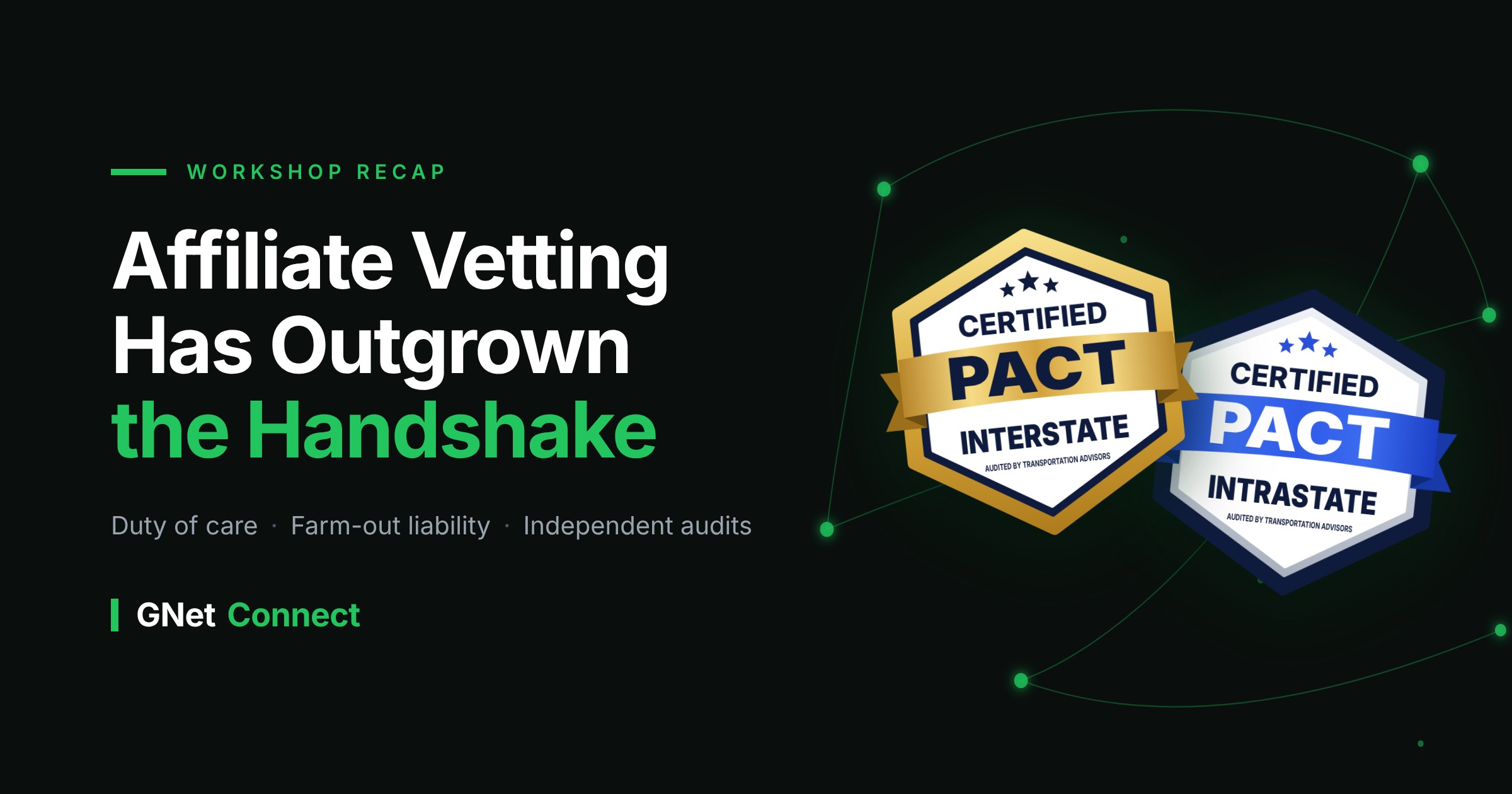
- Get certified. Operators that meet the standard receive a signed certificate and a badge on their GNet profile, in search and in Fleet Search results. The detailed audit report stays private; you decide which buyers, partners or underwriters see it.
There are two badges:
- Gold certifies interstate operation under federal operating authority, including trips connected to airports, train stations, ports and bus terminals.
- Blue certifies intrastate operation under state regulations, on trips not connected to interstate travel.
Badges renew every 12 months, and come off if insurance lapses or an FMCSA safety rating becomes unsatisfactory. Certification is built on USDOT authority, so it covers US carriers today.
For buyers, this is the part that saves time: a badge on a profile they’re already looking at, instead of a questionnaire sent one operator at a time. More on that side of the equation in Duty of care for TMCs: why ground is where you win or lose the account and What to actually ask a ground transportation supplier.
Questions About Affiliate Vetting and Compliance Certification
Why isn’t a certificate of insurance enough to vet an affiliate?
A COI shows a policy existed on the day it was issued. It says nothing about driver qualification, drug and alcohol testing or vehicle maintenance, which is what an audit checks.
Am I responsible for a trip I farm out to an affiliate?
Workshop panelists noted that an operator who farms out a job is acting as a broker for that trip and can share liability if something goes wrong. Your attorney and insurer can tell you your specific exposure. Vetting the affiliate properly is how you reduce it.
What’s the difference between the Gold and Blue badge?
Gold certifies interstate operation under federal operating authority, including airport, rail, port and bus terminal trips. Blue certifies intrastate operation under state regulations.
What are the three inspection types?
Type 1 covers sedans and SUVs only. Type 2 covers mixed fleets with sedans and SUVs alongside larger vehicles. Type 3 covers commercial vehicles only.
Can a small operator get certified?
Yes. Fleet size doesn’t matter. A three-car airport transfer business can hold the same badge as a large fleet.
Who performs the audit?
Transportation Advisors, an independent compliance firm led by Tom Holden. GNet hosts the documents and displays the result; it does not audit or grade operators.
▶ Watch the full workshop · Subscribe to GNet on YouTube for future Workshop Wednesday sessions.
Ready to grow your ground transportation business?
GNet Connect gives you a verified professional profile, partner discovery tools, and access to the largest ground transportation network in the world — 6,500+ operators across 100 countries.